
Blog

Subscribe to receive our free Beginner's Guide to Psychedelic Integration.
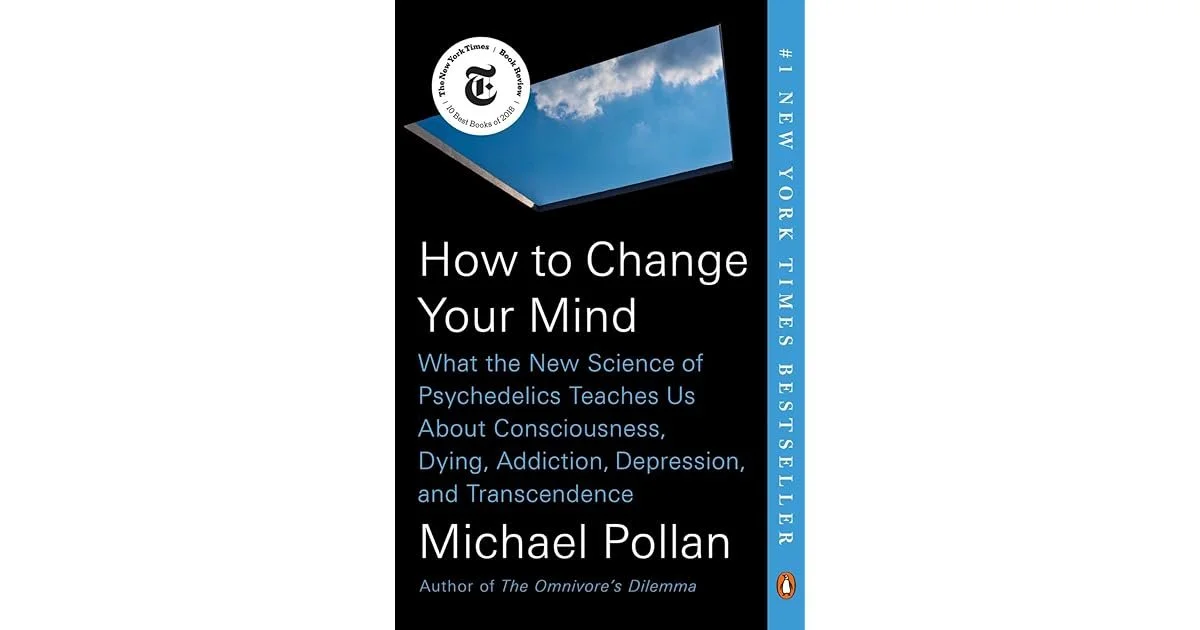
A Recommended Read: How to Change Your Mind
Michael Pollan's How to Change Your Mind is the most accessible mainstream introduction to contemporary psychedelic therapy and remains worth reading, with some important caveats about what's changed in the field since 2018. A therapist's recommendation and a note on how to read it well.
If you're new to the contemporary conversation about psychedelic therapy and you want one accessible book to start with, this is the one I'd point you toward.
Michael Pollan's How to Change Your Mind: What the New Science of Psychedelics Teaches Us About Consciousness, Dying, Addiction, Depression, and Transcendence, published by Penguin Press in 2018, did more than any other single book to move the contemporary psychedelic conversation from fringe to mainstream. It was a bestseller, became a Netflix documentary series, and has likely been read by more people interested in this field than any other contemporary book on the subject.
It's also a model of careful, curious, journalistically rigorous engagement with material that's easy to either overhype or dismiss. Pollan, a respected writer best known for his work on food and agriculture, came to this topic as a skeptic and a journalist. He researched. He interviewed researchers and patients. He underwent guided experiences himself with LSD, psilocybin, ayahuasca, and 5-MeO-DMT. And he wrote about all of it with the measured, slightly bemused intelligence that's his hallmark.
The book is genuinely worth reading. I want to offer a few observations about how to read it well.
What the Book Does Well
The book traces the history of psychedelic research carefully — the early promise in the 1950s and 60s, the cultural and political backlash, the long suppression, and the cautious renaissance that began in the late 1990s. Pollan is good on the institutional history. He's particularly good on the figures who kept the research alive during the dormant years and the new generation of clinicians who picked it up.
He's strong on the current clinical research, particularly the work at Johns Hopkins, NYU, and Imperial College London on psilocybin for depression, anxiety, end-of-life distress, and addiction. He presents the studies fairly, neither overselling the results nor dismissing them.
He's especially valuable on the experiential dimension. Most journalists who write about psychedelic therapy don't actually undergo the experiences they're describing. Pollan does, and his accounts of his own sessions are some of the most honest and unsentimental writing on the subject. He neither claims to have been transformed in some grand way nor dismisses what happened. He sits with the experiences and lets them be complicated.
And his prose is excellent. The book reads easily, moves at a thoughtful pace, and gives you genuine information without being either dry or breathless. For most readers, it's an ideal entry point.
What to Hold Lightly
A few things to keep in mind as you read.
The book is now seven years old. Published in 2018, it represents a particular moment in the psychedelic conversation — one of cautious optimism, with FDA approval of MDMA-assisted therapy for PTSD seeming imminent and the broader field on a steady upward trajectory. A great deal has happened since. The FDA rejected MDMA-assisted therapy in August 2024 over serious concerns about study design, blinding, and ethical violations. Compass Pathways' psilocybin trials have produced positive Phase 3 results but the regulatory path remains uncertain. The MAPS organization at the center of Pollan's optimistic account has gone through significant institutional changes and ethical reckonings. The book doesn't capture any of this.
The treatment is more optimistic than the current evidence supports. Pollan was writing during a wave of genuine enthusiasm, and the book reflects that. The studies he highlights were promising, but many of the most exciting early findings have proven harder to replicate at scale than the book implies. The field has been forced into a more sobered position since — recognizing that the medicines are real but their integration into clinical care is harder than was hoped.
The mystical experience framing is more contested than the book suggests. Pollan presents the research on mystical-type experiences as central to therapeutic outcomes, and this remains a major theme in the field. But the framing has been challenged — partly by philosophers like Chris Letheby, who argue that the therapeutic value doesn't actually depend on mystical content, and partly by researchers who worry about the ethical implications of treating mystical experience as the active ingredient. Read Pollan's enthusiasm for the mystical-experience framework with some critical distance.
The book doesn't address what the field has since had to learn about ethics and care. The MAPS-related sexual misconduct cases, the journal retractions, the gap between research conditions and real-world clinical implementation — these are real and ongoing concerns that have shaped how careful practitioners now think about this work. The book predates most of this conversation.
Why I Still Recommend It
With those caveats, the book remains the best mainstream introduction to the field, and one of the few that combines historical context, contemporary science, and honest first-person reporting in a single accessible package. Most readers who finish it have a substantially clearer picture of what psychedelic therapy is, why it's being studied, and what's at stake than they did before.
For people considering psychedelic-assisted therapy now, the book is a useful starting point but not a complete guide. You'll want to supplement it with more current sources for the regulatory landscape, the ethical conversations, and the specific clinical considerations that have come into clearer view since 2018.
For people not considering psychedelic therapy but curious about the broader cultural conversation, the book is excellent. It will give you the vocabulary, the history, and the basic clinical picture to follow what's happening as the field continues to develop.
For practitioners new to this space, it's still one of the recommended starting points — though I'd pair it with more recent and more critical literature.
Where to Find It
How to Change Your Mind is widely available — bookstores, libraries, audiobook. The Netflix documentary series based on the book covers similar territory in four hour-long episodes and is also worth watching if you prefer video.
If you find yourself drawn into the larger questions the book raises — about your own potential interest in this work, about how to think clearly about psychedelic experience, about what careful contemporary care actually involves — you're welcome to book a consultation.

The Mind Is Not a Window: What Huxley Got Right About Psychedelics
In 1954, Aldous Huxley proposed that the mind is a filter, not a window — and that psychedelics temporarily loosen that filter, with consequences that can be heavenly or hellish. A therapist on what Huxley got right, what modern neuroscience has refined, and where the field actually is right now in the messy work of bringing these substances into mainstream medicine.
In 1954, long before brain scans or clinical trials, Aldous Huxley took mescaline and wrote something that still feels slightly dangerous to read.
He suggested that your mind is not a window onto reality. It's a filter.
In his book The Doors of Perception, Huxley proposed that the brain functions as a "reducing valve" — screening out most of what's actually there so you can survive, function, and not be overwhelmed. Psychedelics, he argued, temporarily loosen that filter, letting through what's normally screened out.
Two years later, in Heaven and Hell, he expanded the idea. When the filter opens, what comes through isn't always beautiful. Sometimes it's radiant, transcendent, luminous. Sometimes it's terrifying. He called it heaven and hell. Today we might call it altered states of consciousness — and we'd note, more clinically, that the same opening can produce both.
What's striking, seventy years later, isn't that Huxley wrote any of this. It's how close modern neuroscience has come to taking him seriously — and where it has departed from him in important ways. I want to walk through both, because Huxley's framework still illuminates something the more technical accounts don't quite reach, and because the current moment in psychedelic medicine asks us to hold both his insights and their limits.
The Filter, Translated
Huxley didn't have the vocabulary of receptors or neural networks. He was writing as a literary man with a deep curiosity about what his own mind was doing. But if you translate his idea into contemporary terms, it lands in a familiar place.
Modern psychedelic research — particularly work on psilocybin — suggests that these compounds disrupt the brain's normal patterns of organization. Activity becomes less synchronized. Networks that ordinarily operate in tight coordination begin to loosen. The brain, in a real sense, becomes less constrained by its own habitual structures.
Researchers wouldn't say the brain is revealing ultimate reality. That's a metaphysical claim, and science is careful about those. But they would say something adjacent: psychedelics appear to reduce rigid patterns of perception, thought, and self-representation. The familiar filters loosen.
That's not exactly a reducing valve in Huxley's sense. He thought the filter was protecting us from too much truth. Modern neuroscience tends to say the brain maintains efficient models of the world, and psychedelics temporarily destabilize those models. Same shape, different language.
The difference matters philosophically — but for the lived experience of someone taking these compounds, it makes little difference. Whether you call it filter dissolution or model destabilization, the result is the same: the world looks different. Things that were ignored become vivid. Things that were certain become uncertain. The construction becomes briefly visible as a construction.
When a Chair Stops Being a Chair
One of the strangest passages in The Doors of Perception is also the simplest.
Huxley looks at a chair. Not metaphorically, not symbolically — just a chair. And he becomes transfixed, not by what it means or what it's for, but by what it is. Its color. Its form. Its sheer presence. He calls this is-ness — a direct encounter with existence, stripped of utility and interpretation.
This sounds mystical. But you can map parts of it onto modern cognitive science.
Under psychedelics, salience shifts. The brain stops prioritizing what's useful and starts amplifying what's there. Categories loosen. Familiar things become strange, vivid, emotionally charged. The chair stops being a chair-for-sitting and becomes simply this remarkable, present object that you've been walking past for years without seeing.
For some people, this shift is transformative. They describe seeing their own children, their partners, the trees outside their window, the food on their plate — as if for the first time. The veil of habituation thins, and the world comes back through with its color saturated.
This is one of the things that gives psychedelic experiences their reputation for being revelatory. Not because the world changed, but because the layer of automatic processing that filters how you experience it briefly thinned. What's already there can be encountered more directly.
Heaven and Hell Weren't Metaphors
In Heaven and Hell, Huxley insists that visionary states are not inherently positive. The same mechanisms that generate beauty can generate horror.
Modern research agrees, in a more clinical tone.
Psychedelics can produce deep emotional insight, a sense of unity or meaning, and what some describe as the most important experiences of their lives. They can also produce anxiety, terror, confusion, and lasting destabilization. The same compound, in the same person, can be radiant one week and horrific the next, depending on what's going on inside and around them.
This is why contemporary research emphasizes set and setting — the psychological mindset and physical environment in which the experience occurs. It's not a soft variable. It's central to outcomes. Huxley intuited this decades before clinical research could quantify it.
What he understood is that these states are not just pharmacological events. They are total experiences, shaped by context, expectation, interpretation, and the inner world of the person having them. The same opening can lead to liberation or destabilization depending on what surrounds it.
This matters clinically. The careful work of preparing someone for a psychedelic experience, providing a safe and supportive environment, and integrating what arises afterward isn't ornamental. It's the difference between a heavenly experience and one that adds to suffering.
Where the Science Got Practical
The real shift from Huxley's era to now is not philosophical — it's clinical. The questions changed.
Researchers stopped just asking what is consciousness? and started asking: can changing consciousness treat disease?
The most compelling evidence so far is in depression. Psilocybin-assisted therapy has shown the ability to produce rapid reductions in depressive symptoms in some patients, particularly when paired with structured psychological support. There's also growing research into addiction — including alcohol use disorder, smoking cessation, and other substance use patterns — and into anxiety, end-of-life distress, and treatment-resistant conditions where standard approaches have not produced full relief.
The early results have been striking enough to drive significant investment, both scientific and commercial. Major academic centers have established psychedelic research programs. Pharmaceutical companies have invested heavily. Phase 3 trials are underway for multiple compounds. Some U.S. states — most notably Oregon and Colorado — have moved forward with legal psilocybin therapy programs ahead of federal action.
But the field is far from settled. And recent events make this clearer than they have in years.
What the FDA Decision Revealed
In August 2024, the FDA rejected MDMA-assisted therapy for PTSD — the first time a Schedule I psychedelic had come before the agency for medical approval. The decision surprised many in the field, who had assumed the strong clinical results and significant need would carry the application through.
The concerns the FDA raised were substantial. Study design problems. Issues with blinding — meaning patients and therapists could often guess who had received the drug versus a placebo, which compromises the science. Allegations of sexual misconduct during one of the midstage trials. Lack of standardization in the psychotherapy component, which the FDA noted would make the treatment difficult to reproduce reliably if approved.
Some of these were issues with one specific company's specific application. But some were deeper concerns about the field itself — about how to study treatments where the subjective experience is part of the therapy, how to ensure rigorous trials when participants can usually tell whether they got the drug, and how to standardize a treatment that involves both pharmacology and skilled psychological support.
The rejection sent shockwaves through psychedelic medicine. It signaled that the path to FDA approval would be longer, more expensive, and more uncertain than many had hoped.
As of mid-2026, the next major test is Compass Pathways' psilocybin therapy for treatment-resistant depression. After two positive Phase 3 trials, the company is moving toward a New Drug Application that could result in psilocybin becoming the first FDA-approved classical psychedelic — potentially by late 2026 or early 2027. But the path is not guaranteed. The FDA has made clear it will not lower its standards. The political and regulatory landscape continues to shift.
This is the current state: high potential, incomplete validation, and a field reckoning with the gap between what individual experiences suggest and what rigorous clinical evidence requires.
What Huxley Saw, and What He Couldn't See
Huxley didn't prove that psychedelics reveal a deeper layer of reality. That question is still open, probably unanswerable in scientific terms.
But he did get several things right that the more careful, technical accounts can sometimes miss:
That perception is not neutral; it is filtered.
That changing consciousness changes meaning, not just sensation.
That altered states are structured, not random — they follow particular patterns.
That the same mechanism can produce beauty or terror, depending on what surrounds it.
That what we call reality is, in significant part, negotiated by the brain.
What Huxley couldn't see, of course, is everything that's happened in the seven decades since. He didn't see the careful clinical trials that have begun to specify what psychedelics actually do. He didn't see the failures — the recreational use that has harmed many people, the unregulated retreats where things have gone badly, the regulatory rejections of work that wasn't quite ready. He didn't see the careful contemporary practitioners who have learned that the experience is only one part of a longer process, and that integration is often where the real change happens.
If Huxley were writing today, I suspect he would refine his framework rather than abandon it. The filter loosens, yes. What comes through can be heaven or hell, yes. But what happens to the experience afterward — how it's held, witnessed, supported, integrated into a life — turns out to matter at least as much as the experience itself.
What This Means for the Current Moment
For people considering psychedelic experience now, in this in-between time before legal frameworks are fully in place, a few things seem worth holding:
The experiences are real. They can be genuinely transformative. The clinical evidence supports their potential, particularly for conditions that haven't responded to other treatments.
They are also not guaranteed. Heaven and hell are both possibilities. The same compound, the same setting, the same intention can produce profoundly different experiences in different people, or in the same person at different times.
What surrounds the experience matters as much as the experience. Set, setting, preparation, support, integration. Without these, even powerful experiences often fade or destabilize. With them, ordinary experiences can become foundational to lasting change.
The field is still figuring itself out. The MDMA rejection has been a reset. The questions about study design, standardization, and the role of the therapeutic component are real. Anyone telling you they have it all figured out — whether they're selling a retreat, a treatment, or a worldview — is probably overstating the case.
Patience is part of the work. The dream of a quick fix through pharmacology is older than psychedelic medicine. It has never been quite right. What these compounds offer is a particular kind of opening, the value of which depends on what's done with it, by whom, over what kind of time.
A Closing Thought
What I find most enduring about Huxley's work — even where it overreaches, even where science has moved past it — is its acknowledgment of how much we don't know about consciousness, including our own.
The mind we live with is more constructed than it feels. The world we perceive is more filtered than we realize. The self we identify with is more elaborate and more recent than we tend to believe. These observations are humbling, and they should be.
But they're also liberating. If experience is filtered, the filter can sometimes thin. If perception is constructed, the construction can sometimes shift. If the self is a model, the model can sometimes update.
This is what Huxley glimpsed in his armchair in 1954, and what modern neuroscience is still working to understand. Not that psychedelics open a door to another world — but that they reveal how constructed this one already is, and how much room there might be for it to be experienced differently.
That insight doesn't require taking anything. It's available, in quieter forms, to anyone willing to attend carefully to their own mind. The compounds may speed the recognition. The recognition itself is older than any of them.
If you're sitting with the questions Huxley raised — about your own perception, your own self, the patterns that have organized your experience — and you'd like a place to explore them carefully, you're welcome to book a consultation. The work is real. It moves at the pace it moves. And it does not require certainty about questions that may not have certain answers.
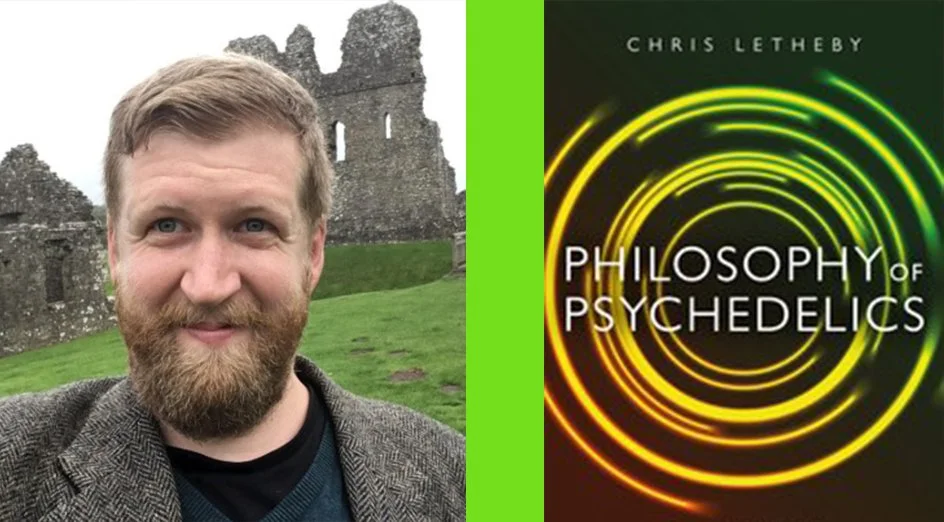
Can Psychedelics Reveal Truth, or Just Change Your Mind?
When someone has a profound psychedelic experience and emerges with strong convictions about the nature of reality, what should they do with those convictions? A therapist on philosopher Chris Letheby's careful argument that psychedelic experiences can produce genuine insight — particularly into the constructed nature of the self — without requiring the metaphysical claims that often accompany them.
There's a particular kind of conversation that happens in the weeks and months after a powerful psychedelic experience.
The person who has had the experience returns from it changed. They've seen something. Felt something. Understood something. They want to talk about it, and as they try, they find themselves making claims that sound, in ordinary daylight, somewhere between profound and embarrassing. I understood the nature of reality. I encountered God. I saw that everything is connected. I learned that death isn't real. I knew, for those hours, exactly what the universe is.
The listener — even a sympathetic one — often doesn't know what to do with these reports. The experience clearly mattered. The person clearly isn't lying. Something happened that they're trying to convey. But the claims being made about reality itself often go further than what any experience, however powerful, could actually justify.
This is one of the most important questions in psychedelic medicine, and it's underaddressed in most popular conversation about the field. When someone has a profound psychedelic experience and emerges with strong convictions about the nature of reality — convictions they didn't have before, convictions that feel utterly certain — what should they do with those convictions? Are they genuine insights into something deeper? Or are they powerful experiences that the brain is producing for its own reasons, with no special access to truth?
The philosopher Chris Letheby has written one of the most important books on exactly this question. His Philosophy of Psychedelics, published by Oxford University Press in 2021, takes the philosophical questions about these experiences as seriously as the clinical and neurological ones. His answer is more interesting than either pole of the usual debate, and I think it's clinically essential for anyone considering or integrating psychedelic experiences.
The Two Camps and Why Both Are Incomplete
The conversation about psychedelics tends to polarize between two positions.
The mystical view treats psychedelic experiences as windows onto deeper reality. Ego dissolution reveals the true nature of the self. Mystical experiences are encounters with something genuinely transcendent. The medicine opens doors that ordinary consciousness keeps closed. This view has deep roots — in indigenous traditions, in 1960s thinkers like Aldous Huxley, in much contemporary spiritual psychedelic culture. It honors the felt depth of these experiences and treats them with the seriousness they often demand.
The naturalistic view treats psychedelic experiences as brain events. Powerful, sometimes useful, but ultimately just neurochemistry. The sense of cosmic significance is a side effect of altered brain function. The mystical content isn't real; it's a particularly compelling form of hallucination. This view honors scientific caution and refuses to make claims that can't be empirically supported. It also tends, in its blunter forms, to dismiss what people have actually experienced as somewhere between delusion and chemistry.
Both views miss something. The mystical view risks unjustified metaphysical claims. The naturalistic view risks dismissing experiences that genuinely matter and have measurable therapeutic effects.
Letheby's project is to find a third position. His argument, in essence: psychedelic experiences can produce real epistemic value — genuine insights, real knowledge — even if we don't accept their metaphysical claims at face value. You can take these experiences seriously without taking them literally.
The Comforting Delusion Objection
Letheby starts with what he calls the Comforting Delusion Objection. It's the worry that psychedelic therapy might be working only by deluding people with false metaphysical beliefs — that the depression lifts because the person now believes the universe loves them, or that they've encountered God, or that death isn't real. If that's how the therapy works, the objection goes, then it's working through deception, and that's ethically problematic even if it relieves suffering.
This objection deserves to be taken seriously. If psychedelic therapy primarily produced relief by installing false beliefs, it would have a real ethical problem. The therapist would be implicated in a kind of psychological con — even a well-meaning, helpful con, but still one whose mechanism depends on deceiving the patient.
Letheby's response is methodical. He argues that the therapeutic benefit of psychedelic experience doesn't actually depend on metaphysical conclusions. It depends on something else: phenomenological insight into the constructed nature of the self.
This is the key move. Let me unpack it.
What's Actually Being Revealed
When someone has a psychedelic experience of ego dissolution — when the felt sense of being a separate, continuous self temporarily loosens — they're not necessarily discovering anything about the metaphysical structure of the universe. They are discovering something quite specific about themselves: that the self they ordinarily experience as solid and continuous is, in fact, something constructed. Something the brain is doing. Something more flexible and less essential than it feels.
This is not a metaphysical claim. It's a claim about your own mind. And — importantly — it's almost certainly true. The neuroscience converges with the phenomenology: the self is a model the brain constructs, not a fixed entity it contains. People who experience this directly, even briefly, often emerge with a different relationship to themselves. Less identified with the suffering self. More aware that the patterns they've been running aren't permanent features of who they are. More able to consider that change is possible at a deeper level than they had imagined.
This is what Letheby calls knowledge by acquaintance — knowing something not as an abstract claim but through direct experience. A person who has never been heartbroken can know intellectually that heartbreak is painful. A person who has been heartbroken knows it in a different way. Psychedelic experience can produce knowledge of the constructed nature of the self in this richer, more directly known sense.
This kind of knowledge, Letheby argues, is real, valuable, and naturalistically respectable. You don't need to commit to any controversial metaphysical claim to acknowledge that someone who has directly experienced the constructed nature of their own self has learned something genuine.
What's Not Necessarily Revealed
The trouble comes when this insight gets extrapolated.
Many psychedelic experiences come with a sense of cosmic significance. The person doesn't just feel that their self is constructed; they feel they have understood the universe itself. Reality is consciousness. Everything is one. There is no death. We are all connected at the deepest level. I have encountered the divine.
These claims may be true. Some of them may even be true in ways philosophy can be slow to acknowledge. But they go further than the experience can actually justify. The experience produced certainty. The certainty is real. But certainty is not the same as accuracy, and Letheby is careful to point out that the very neurochemistry that produces the felt sense of profound insight may also produce overconfidence in conclusions that haven't been adequately tested.
This is one of the genuine risks of psychedelic experience that doesn't get talked about enough. The medicines don't just produce experiences. They produce conviction. The conviction can outpace the justification. People can emerge from these experiences with metaphysical beliefs they hold with the certainty of having known them directly, and they can build their lives around those beliefs in ways that don't always serve them.
I see this clinically. The person whose marriage breaks up because they've decided, after a ceremony, that their partner doesn't share their cosmic understanding. The person who quits a career they were good at to follow a calling they received during a journey. Sometimes these decisions turn out to be wise. Often, in retrospect, they look like a person acting on certainty that hadn't quite been tested against ordinary life.
The risk isn't that people have spiritual experiences. It's that they conflate the depth of an experience with the truth of every claim that emerges from it.
Letheby's Resolution
Letheby's framework offers a way through this.
The therapeutic and epistemic value of psychedelic experience, on his account, doesn't depend on the metaphysical claims being true. It depends on something more modest and more defensible: that the experiences reveal the constructed nature of the self, expand the person's sense of what's psychologically possible, and create conditions in which rigid patterns of thought and feeling can soften.
This is what produces lasting change. Not the conviction that consciousness is fundamental to the universe, or that one has encountered God. The experiential recognition that the self you've been suffering inside is not as solid as it felt. That recognition, even briefly held, can be liberating in ways that careful philosophical argument never quite is.
The metaphysical content — the sense of cosmic significance, the encounter with what may or may not be the divine — Letheby treats with what he calls epistemic humility. These experiences shouldn't be dismissed as meaningless hallucinations. They also shouldn't be treated as proof of metaphysical claims they can't independently establish. The right stance is something like: something real happened that I don't fully understand. I'll let it work on me without committing too quickly to what it means.
This is, I think, the most clinically and philosophically responsible way to hold psychedelic experience. It honors the depth without ceding judgment. It accepts the value without endorsing every claim.
Why This Matters for Integration
This question is not abstract. It comes up constantly in integration work with people who have had powerful psychedelic experiences.
The person who returns from a journey convinced of something they hadn't believed before faces a real choice. They can integrate the experience — let its depth and meaning continue to work on them — without yet committing to particular metaphysical conclusions. Or they can quickly translate the experience into beliefs and start rearranging their life around those beliefs.
The first path tends to produce more sustainable change. The depth of the experience gets honored. The harder work of letting it gradually reshape ordinary life can unfold over months and years. The metaphysical questions can stay open, considered, examined against further experience and ordinary judgment.
The second path is more vulnerable to a particular kind of trap. Beliefs adopted in the wake of profound experience are sometimes adopted to protect the experience — to preserve its meaning by codifying it. But this codification can become rigid. The person becomes someone with a particular spiritual identity, a particular metaphysical commitment, a particular way of seeing the world they're now invested in defending. The original openness that made the experience meaningful can harden into something more brittle.
This is one form of what's sometimes called spiritual bypass — using spiritual conclusions to avoid harder psychological work. The person who has decided, after a ceremony, that everything happens for a reason may use that belief to avoid grieving real losses, to bypass difficult feelings, to skip over the slow work of actually changing how they live. The metaphysical conclusion gets installed where the harder work should be happening.
Good integration work helps people stay with the experience without rushing into beliefs that might not serve them. What was true about what you experienced? What's worth letting work on you? What conclusions are you reaching that may have outrun the evidence? These are questions a thoughtful integration therapist can help someone sit with — without dismissing what was real, and without endorsing whatever the experience seemed to claim.
A Deeper Continuity
What I find most valuable about Letheby's framework is that it connects psychedelic experience to a broader question that applies far beyond psychedelics.
This same question shows up in religious experience. Mystical states in meditation. Encounters with grief, beauty, or terror that feel revelatory. Moments when ordinary reality seems to peel back and reveal something underneath. People throughout history have had experiences that produced powerful conviction about the nature of things — and the question of how to hold those convictions has been a perennial one for human beings.
The traditional contemplative answer, in many wisdom traditions, has been go slowly. Hold the experience without rushing to conclusions. Let it work on you. See what remains after months and years. The teacher's job, in many traditions, is partly to keep the student from getting attached to particular experiences or convictions — to keep the inquiry open rather than closing it down with premature certainty.
Letheby is, in a sense, applying this same wisdom to the modern question of psychedelic experience. The experiences are real. They may produce genuine insight, particularly into the constructed nature of the self. They also produce conviction that can outpace evidence, and the careful work is holding both — the depth and the humility — at once.
A Closing Thought
What's available in a careful psychedelic experience, on Letheby's view, isn't access to ultimate reality. It's something more modest and more useful: a direct, embodied recognition that you are not what you thought you were. That the self you've been suffering inside is one of many configurations your mind could take. That the patterns you've assumed were essential to who you are are, in fact, optional.
This is real knowledge. It's not the same as metaphysical certainty about the universe, but it doesn't need to be. It's enough to support meaningful psychological change. It's enough to open doors that ordinary consciousness keeps closed. It's enough, often, to make people's lives meaningfully better.
What it asks in return is a kind of intellectual humility. The willingness to hold what you've experienced without immediately codifying it. The capacity to let an experience continue to work on you without rushing to install conclusions. The patience to let depth become wisdom over time rather than mistaking the felt force of an experience for the truth of every claim that emerges from it.
This may be the most important integration skill there is. And it applies whether you've ever taken a psychedelic substance or not.
If you'd like to explore what careful, clinically informed integration of psychedelic experiences could look like — or to think through how to hold profound experiences of any kind without losing yourself in them — you're welcome to book a consultation.