
Blog

Subscribe to receive our free Beginner's Guide to Psychedelic Integration.
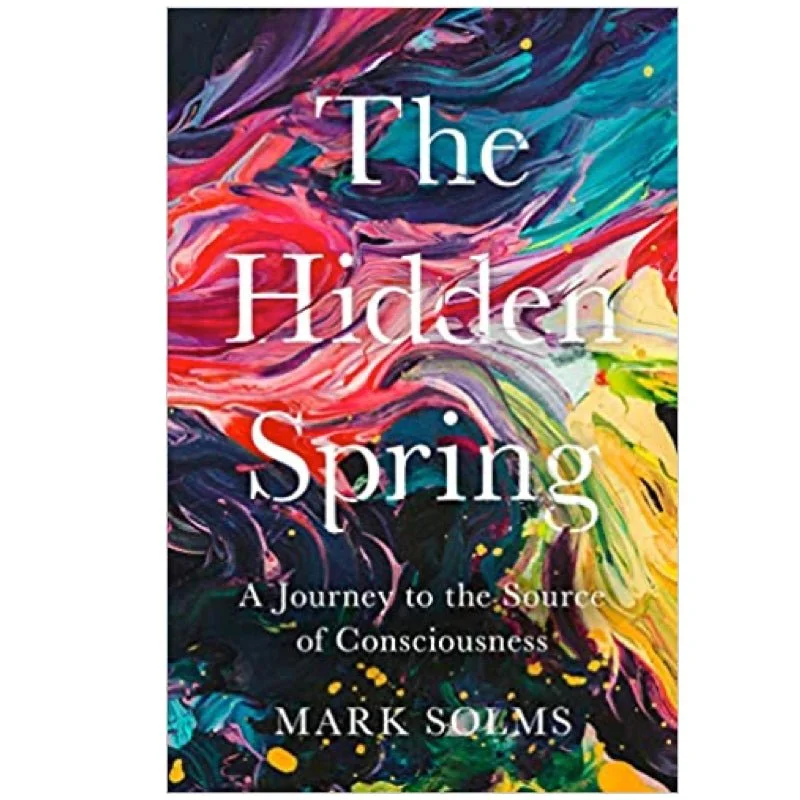
Consciousness Begins with Feeling
Neuropsychoanalyst Mark Solms argues that consciousness doesn't begin with thinking — it begins with feeling, generated by ancient brainstem structures that monitor the body and produce the affective signals that motivate all behavior. A therapist on what this framework means for healing, why thinking alone often fails to reach what hurts, and why depth-oriented and psychedelic work aim at the feeling layer rather than the thinking one.
There's a quiet conviction that runs through most modern theories of consciousness, and it goes something like this: consciousness is something the cortex does. The folded, gray, evolutionarily recent outer layer of the brain. That's where perception happens, where thought happens, where the self gets constructed. The rest of the brain (the brainstem, the older structures we share with much simpler animals), serves consciousness without being where consciousness lives.
In The Hidden Spring: A Journey to the Source of Consciousness, published in 2021, the neuropsychoanalyst Mark Solms argues that this conviction has the picture exactly inverted.
Consciousness, he proposes, doesn't begin with the cortex. It begins with the brainstem. Not with thinking. With feeling. The raw affective states that animals experience long before they develop anything like cognition. States of pleasure, pain, hunger, fear, the felt urgency of being alive are not the byproducts of consciousness. They are its source.
This is not a minor adjustment. It's a fundamental reframing of where awareness actually lives, what it's for, and what kind of work we should expect to do if we want to change it. I want to walk through Solms's argument because I think it gives a neurological home to something good clinicians have always known: that real psychological change has to reach the feeling layer, not just the thinking one. And it changes how we should understand what depth-oriented and psychedelic work are actually doing.
What Solms Is Actually Claiming
Mark Solms is an unusual figure. He's both a neuropsychologist with serious credentials and a trained psychoanalyst. He founded the field of neuropsychoanalysis, which has spent decades trying to bring Freud's clinical insights into productive conversation with contemporary brain science. His new book is, in some sense, the culmination of that project.
His central claim is built on a body of clinical evidence that the cortical-consciousness mainstream has long had trouble explaining.
Patients with severe cortical damage — including, in some cases, near-total loss of cortical function — can remain awake, responsive, emotionally expressive, and recognizably aware in ways that the cortical theory predicts they should not be. Children born without significant cortex (hydranencephaly, for instance) show clear signs of pleasure, distress, recognition, and affective life. They smile at their mothers. They cry when in pain. They orient to comforting voices. By the standards of the cortical theory, they shouldn't be conscious at all. By the standards of anyone who has actually met them, they clearly are.
Damage to specific brainstem structures, on the other hand, can eliminate consciousness entirely, even when the cortex is fully intact. The brainstem isn't just supporting consciousness from below. Damage there abolishes awareness in ways that no amount of cortical damage seems to fully achieve.
What does this evidence point to? Solms argues that consciousness is generated, fundamentally, by a small set of brainstem structures whose job is to monitor the body's internal state and produce the felt signals that motivate behavior. The cortex isn't where consciousness lives. The cortex is what consciousness uses to elaborate, to think, to plan, to remember. But the consciousness itself, the basic felt sense of being alive, of mattering to oneself, of caring about what happens, comes from somewhere deeper.
And what comes from that deeper place isn't thought. It's feeling.
Why Feeling Comes First
The evolutionary logic here is compelling once you sit with it.
Animals had affective states (pleasure, pain, hunger, satisfaction) long before they had anything resembling cognition. The very simplest organisms have to be able to move toward what helps them and away from what harms them. To do that, they need some kind of internal signal that distinguishes good from bad, some felt valence that motivates behavior. Without it, no organism survives. The capacity to feel something as good or bad is, in this view, the most ancient and fundamental form of consciousness.
Thinking, by contrast, came much later. Higher cognition (abstract reasoning, language, self-reflection), is a recent evolutionary development, dependent on cortical structures that most animals don't have. If consciousness required cognition, most of the living world wouldn't be conscious. Solms argues, with the affective-neuroscience tradition that goes back to Jaak Panksepp, that this conclusion gets the picture backward. Most animals are conscious. They just feel without thinking the way we do.
What we add, with our developed cortex, isn't consciousness. It's the elaboration of consciousness into thought, narrative, planning, self-reflection. The cortex is what allows us to think about our feelings. But the feelings themselves, and the consciousness that goes with them, predate the cortex and don't depend on it.
This is why, in this view, consciousness is fundamentally about valuing the world rather than representing it. The basic question consciousness exists to answer isn't what's out there? It's what should I do? What helps me? What harms me? Feeling is the answer. Thought is a later, much more elaborate way of refining the same basic project.
The Implication for the Self
If Solms is right, then the self isn't primarily a thinking thing. It's primarily a feeling thing.
The "core self," in this view, is built from affective signals about the body's state. Whether you're hungry, tired, safe, threatened, satisfied, longing, grieving, content. These bodily and emotional states are what produce the foundational sense of being you — alive, mattering to yourself, with a stake in what happens next.
The thinking self, the narrative self, the verbal self, the self that has opinions and remembers stories and plans the future, is layered on top of this affective core. It depends on the core for its substance. Without the underlying affective life, the thinking would have nothing to be about. The cortex elaborates what the brainstem cares about. Without the caring, the elaborating has no meaning.
This is, in some sense, a return to something Freud knew but couldn't yet ground neurologically, that the unconscious is older and more fundamental than the conscious, that what drives behavior is rarely what we can articulate, and that the talking mind we identify with is a relatively thin layer sitting on top of much deeper systems. Solms is one of the few contemporary neuroscientists making the explicit bridge between modern brain science and this older psychoanalytic understanding.
What This Means Clinically
For clinical work, the implications are significant.
Most contemporary psychotherapy operates primarily at the cortical layer — working with thoughts, beliefs, narratives, cognitive patterns. Cognitive behavioral therapy treats the thoughts. Many forms of psychoanalytic and psychodynamic therapy work with the narrative self. Even much depth therapy operates more verbally than it sometimes acknowledges.
If Solms is right, this often misses where the issue actually lives.
The depression that won't lift through better thinking. The anxiety that persists despite clear cognitive understanding. The trauma that survives every insight. These aren't failures of the thinking mind to grasp something. They're conditions of the affective core, which are patterns in the deeper system that the cortex can't directly access or modify.
This is why so many of my clients come in having done years of good therapy and still feel that the work hasn't quite reached the layer where the actual suffering is. They understand their patterns. They can name their triggers. They know what their parents did and didn't do. And the feelings haven't changed. The body still braces. The chest still tightens when certain emails arrive. The sleeplessness continues. The thinking layer has been worked on, sometimes extensively. The feeling layer where Solms locates consciousness itself, hasn't been touched.
This is part of why somatic approaches, depth-oriented therapy with attention to affect, body-based work, and contemplative practice reach things that cognitive therapy alone can't. They work with the affective core directly, not by talking about feelings but by attending to them, allowing them, sometimes provoking and metabolizing them.
It's also why the therapeutic relationship itself matters so much. Two people in attuned interaction regulate each other at the level of the affective core, not just the thinking mind. The presence of a steady, attuned, regulated other does work that no amount of insight alone can replicate.
What This Means for Psychedelic Work
Solms's framework also illuminates something specific about psychedelic-assisted therapy that the predictive-processing accounts only partially capture.
Psychedelics, of course, do loosen predictive models. That's been one of the most important neuroscientific findings of the last fifteen years. But what people actually report, during and after these experiences, isn't primarily that their predictive models changed. It's that they felt something, sometimes for the first time in years. Grief that had been frozen begins to flow. Love that had been intellectually known becomes directly felt. Fear that had been managed becomes accessible. The whole affective layer that the thinking mind has been managing from a distance comes into immediate contact.
In Solms's framework, this makes sense. The medicines don't just affect cognition. They open access to the deeper affective systems where consciousness actually lives. The therapeutic value isn't only about reorganizing beliefs. It's about restoring access to the feeling layer that's been suppressed, walled off, or numbed for years.
This is why integration of psychedelic experiences has to attend to the affective dimension specifically. The thoughts that arose during the experience can fade. The narrative interpretations can dissolve. But the felt experience of having met grief, having felt love, having been moved at the level where one is moved can produce lasting change if they're supported, allowed to land, integrated into ongoing emotional life. Not as memory of an experience. As permission to feel again in ordinary time.
Where the Framework Is Still Contested
I want to be honest: Solms's argument is provocative and not universally accepted.
The mainstream of consciousness research continues to focus primarily on cortical processes. Many researchers find Solms's brainstem-centered model too speculative or too dependent on contested interpretations of the clinical evidence. The debates between cortical and subcortical theories of consciousness are real and unresolved.
Solms is also engaged in an ambitious project that goes beyond pure theory. He's been working with collaborators to build a computer model of consciousness based on his framework, in part to test whether his theoretical claims can produce something that behaves recognizably the way conscious systems do. This is interesting and ongoing work, and its results will eventually matter for evaluating his framework. For now, the model is in development and the theoretical claim remains debated.
What I find valuable about Solms, regardless of where the scientific debates eventually land, is the clinical orientation he brings. As both a neuroscientist and a psychoanalyst, he's spent decades sitting with patients whose suffering doesn't reduce to cognitive errors. He's taken seriously the clinical evidence that we are feeling beings before we are thinking ones, and that the work of healing usually has to reach the feeling layer to produce change that lasts. The neurological framework gives a home to insights that clinicians have always known. Whether the framework turns out to be right in its specifics, the clinical orientation seems to me correct.
A Closing Thought
The deepest implication of Solms's work, I think, is this: you are not primarily a thinking thing. You are a feeling organism that thinks.
This isn't a diminishment. It's a more accurate placement. The thinking is real and important and uniquely human. But it's built on top of something older, deeper, more fundamental. The capacity to care about what happens. The felt sense of being alive. The motivational urgency that drives every choice you make.
Healing, in this view, isn't primarily about thinking better. It's about restoring contact with the feeling layer that has been managed, suppressed, or walled off. And its about learning, slowly, to live from that layer rather than from the cortical management that has been keeping it at bay.
Good therapy at depth attends to this. So does contemplative practice, when it's serious. So does the kind of careful work that psychedelic-assisted therapy aims toward. None of these are primarily projects of changing your mind. They are projects of returning you to your feeling.
If you'd like a place to do that work, you're welcome to book a consultation.

The Mind Is Not a Window: What Huxley Got Right About Psychedelics
In 1954, Aldous Huxley proposed that the mind is a filter, not a window — and that psychedelics temporarily loosen that filter, with consequences that can be heavenly or hellish. A therapist on what Huxley got right, what modern neuroscience has refined, and where the field actually is right now in the messy work of bringing these substances into mainstream medicine.
In 1954, long before brain scans or clinical trials, Aldous Huxley took mescaline and wrote something that still feels slightly dangerous to read.
He suggested that your mind is not a window onto reality. It's a filter.
In his book The Doors of Perception, Huxley proposed that the brain functions as a "reducing valve", screening out most of what's actually there so you can survive, function, and not be overwhelmed. Psychedelics, he argued, temporarily loosen that filter, letting through what's normally screened out.
Two years later, in Heaven and Hell, he expanded the idea. When the filter opens, what comes through isn't always beautiful. Sometimes it's radiant, transcendent, luminous. Sometimes it's terrifying. He called it heaven and hell. Today we might call it altered states of consciousness — and we'd note, more clinically, that the same opening can produce both.
What's striking, seventy years later, isn't that Huxley wrote any of this. It's how close modern neuroscience has come to taking him seriously, and where it has departed from him in important ways. I want to walk through both, because Huxley's framework still illuminates something the more technical accounts don't quite reach, and because the current moment in psychedelic medicine asks us to hold both his insights and their limits.
The Filter, Translated
Huxley didn't have the vocabulary of receptors or neural networks. He was writing as a literary man with a deep curiosity about what his own mind was doing. But if you translate his idea into contemporary terms, it lands in a familiar place.
Modern psychedelic research, particularly work on psilocybin, suggests that these compounds disrupt the brain's normal patterns of organization. Activity becomes less synchronized. Networks that ordinarily operate in tight coordination begin to loosen. The brain, in a real sense, becomes less constrained by its own habitual structures.
Researchers wouldn't say the brain is revealing ultimate reality. That's a metaphysical claim, and science is careful about those. But they would say something adjacent: psychedelics appear to reduce rigid patterns of perception, thought, and self-representation. The familiar filters loosen.
That's not exactly a reducing valve in Huxley's sense. He thought the filter was protecting us from too much truth. Modern neuroscience tends to say the brain maintains efficient models of the world, and psychedelics temporarily destabilize those models. Same shape, different language.
The difference matters philosophically, but for the lived experience of someone taking these compounds, it makes little difference. Whether you call it filter dissolution or model destabilization, the result is the same: the world looks different. Things that were ignored become vivid. Things that were certain become uncertain. The construction becomes briefly visible as a construction.
When a Chair Stops Being a Chair
One of the strangest passages in The Doors of Perception is also the simplest.
Huxley looks at a chair. Not metaphorically, not symbolically: just a chair. And he becomes transfixed, not by what it means or what it's for, but by what it is. Its color. Its form. Its sheer presence. He calls this is-ness, a direct encounter with existence, stripped of utility and interpretation.
This sounds mystical. But you can map parts of it onto modern cognitive science.
Under psychedelics, salience shifts. The brain stops prioritizing what's useful and starts amplifying what's there. Categories loosen. Familiar things become strange, vivid, emotionally charged. The chair stops being a chair-for-sitting and becomes simply this remarkable, present object that you've been walking past for years without seeing.
For some people, this shift is transformative. They describe seeing their own children, their partners, the trees outside their window, the food on their plate, as if for the first time. The veil of habituation thins, and the world comes back through with its color saturated.
This is one of the things that gives psychedelic experiences their reputation for being revelatory. Not because the world changed, but because the layer of automatic processing that filters how you experience it briefly thinned. What's already there can be encountered more directly.
Heaven and Hell Weren't Metaphors
In Heaven and Hell, Huxley insists that visionary states are not inherently positive. The same mechanisms that generate beauty can generate horror.
Modern research agrees, in a more clinical tone.
Psychedelics can produce deep emotional insight, a sense of unity or meaning, and what some describe as the most important experiences of their lives. They can also produce anxiety, terror, confusion, and lasting destabilization. The same compound, in the same person, can be radiant one week and horrific the next, depending on what's going on inside and around them.
This is why contemporary research emphasizes set and setting, the psychological mindset and physical environment in which the experience occurs. It's not a soft variable. It's central to outcomes. Huxley intuited this decades before clinical research could quantify it.
What he understood is that these states are not just pharmacological events. They are total experiences, shaped by context, expectation, interpretation, and the inner world of the person having them. The same opening can lead to liberation or destabilization depending on what surrounds it.
This matters clinically. The careful work of preparing someone for a psychedelic experience, providing a safe and supportive environment, and integrating what arises afterward isn't ornamental. It's the difference between a heavenly experience and one that adds to suffering.
Where the Science Got Practical
The real shift from Huxley's era to now is not philosophical, it's clinical. The questions changed.
Researchers stopped just asking what is consciousness? and started asking: can changing consciousness treat disease?
The most compelling evidence so far is in depression. Psilocybin-assisted therapy has shown the ability to produce rapid reductions in depressive symptoms in some patients, particularly when paired with structured psychological support. There's also growing research into addiction, including alcohol use disorder, smoking cessation, and other substance use patterns, and into anxiety, end-of-life distress, and treatment-resistant conditions where standard approaches have not produced full relief.
The early results have been striking enough to drive significant investment, both scientific and commercial. Major academic centers have established psychedelic research programs. Pharmaceutical companies have invested heavily. Phase 3 trials are underway for multiple compounds. Some U.S. states, most notably Oregon and Colorado, have moved forward with legal psilocybin therapy programs ahead of federal action.
But the field is far from settled. And recent events make this clearer than they have in years.
What the FDA Decision Revealed
In August 2024, the FDA rejected MDMA-assisted therapy for PTSD — the first time a Schedule I psychedelic had come before the agency for medical approval. The decision surprised many in the field, who had assumed the strong clinical results and significant need would carry the application through.
The concerns the FDA raised were substantial. Study design problems. Issues with blinding, meaning patients and therapists could often guess who had received the drug versus a placebo, which compromises the science. Allegations of sexual misconduct during one of the midstage trials. Lack of standardization in the psychotherapy component, which the FDA noted would make the treatment difficult to reproduce reliably if approved.
Some of these were issues with one specific company's specific application. But some were deeper concerns about the field itself, about how to study treatments where the subjective experience is part of the therapy, how to ensure rigorous trials when participants can usually tell whether they got the drug, and how to standardize a treatment that involves both pharmacology and skilled psychological support.
The rejection sent shockwaves through psychedelic medicine. It signaled that the path to FDA approval would be longer, more expensive, and more uncertain than many had hoped.
As of mid-2026, the next major test is Compass Pathways' psilocybin therapy for treatment-resistant depression. After two positive Phase 3 trials, the company is moving toward a New Drug Application that could result in psilocybin becoming the first FDA-approved classical psychedelic, potentially by late 2026 or early 2027. But the path is not guaranteed. The FDA has made clear it will not lower its standards. The political and regulatory landscape continues to shift.
This is the current state: high potential, incomplete validation, and a field reckoning with the gap between what individual experiences suggest and what rigorous clinical evidence requires.
What Huxley Saw, and What He Couldn't See
Huxley didn't prove that psychedelics reveal a deeper layer of reality. That question is still open, probably unanswerable in scientific terms.
But he did get several things right that the more careful, technical accounts can sometimes miss:
That perception is not neutral; it is filtered.
That changing consciousness changes meaning, not just sensation.
That altered states are structured, not random — they follow particular patterns.
That the same mechanism can produce beauty or terror, depending on what surrounds it.
That what we call reality is, in significant part, negotiated by the brain.
What Huxley couldn't see, of course, is everything that's happened in the seven decades since. He didn't see the careful clinical trials that have begun to specify what psychedelics actually do. He didn't see the failures, the recreational use that has harmed many people, the unregulated retreats where things have gone badly, the regulatory rejections of work that wasn't quite ready. He didn't see the careful contemporary practitioners who have learned that the experience is only one part of a longer process, and that integration is often where the real change happens.
If Huxley were writing today, I suspect he would refine his framework rather than abandon it. The filter loosens, yes. What comes through can be heaven or hell, yes. But what happens to the experience afterward, how it's held, witnessed, supported, integrated into a life, turns out to matter at least as much as the experience itself.
What This Means for the Current Moment
For people considering psychedelic experience now, in this in-between time before legal frameworks are fully in place, a few things seem worth holding:
The experiences are real. They can be genuinely transformative. The clinical evidence supports their potential, particularly for conditions that haven't responded to other treatments.
They are also not guaranteed. Heaven and hell are both possibilities. The same compound, the same setting, the same intention can produce profoundly different experiences in different people, or in the same person at different times.
What surrounds the experience matters as much as the experience. Set, setting, preparation, support, integration. Without these, even powerful experiences often fade or destabilize. With them, ordinary experiences can become foundational to lasting change.
The field is still figuring itself out. The MDMA rejection has been a reset. The questions about study design, standardization, and the role of the therapeutic component are real. Anyone telling you they have it all figured out — whether they're selling a retreat, a treatment, or a worldview — is probably overstating the case.
Patience is part of the work. The dream of a quick fix through pharmacology is older than psychedelic medicine. It has never been quite right. What these compounds offer is a particular kind of opening, the value of which depends on what's done with it, by whom, over what kind of time.
A Closing Thought
What I find most enduring about Huxley's work, even where it overreaches, even where science has moved past it, is its acknowledgment of how much we don't know about consciousness, including our own.
The mind we live with is more constructed than it feels. The world we perceive is more filtered than we realize. The self we identify with is more elaborate and more recent than we tend to believe. These observations are humbling, and they should be.
But they're also liberating. If experience is filtered, the filter can sometimes thin. If perception is constructed, the construction can sometimes shift. If the self is a model, the model can sometimes update.
This is what Huxley glimpsed in his armchair in 1954, and what modern neuroscience is still working to understand. Not that psychedelics open a door to another world, but that they reveal how constructed this one already is, and how much room there might be for it to be experienced differently.
That insight doesn't require taking anything. It's available, in quieter forms, to anyone willing to attend carefully to their own mind. The compounds may speed the recognition. The recognition itself is older than any of them.
If you're sitting with the questions Huxley raised, about your own perception, your own self, the patterns that have organized your experience, and you'd like a place to explore them carefully, you're welcome to book a consultation. The work is real. It moves at the pace it moves. And it does not require certainty about questions that may not have certain answers.
You Are a Controlled Hallucination: What This Means for Suffering and Healing
Neuroscientist Anil Seth argues that consciousness isn't passive reception of reality — it's an active, ongoing construction your brain produces moment by moment, including your sense of being a self. A therapist on what this framework reveals about trauma, depression, psychedelic therapy, and why understanding yourself as a process rather than a fixed thing opens up new possibilities for healing.
There's a quiet revolution happening in the science of consciousness, and most people haven't heard about it.
For centuries, we've assumed that perception works in a particular way. You open your eyes, light hits your retina, your brain receives that information, and you see the world. The brain is essentially a camera, recording what's out there.
This picture is wrong. Or at least, deeply incomplete.
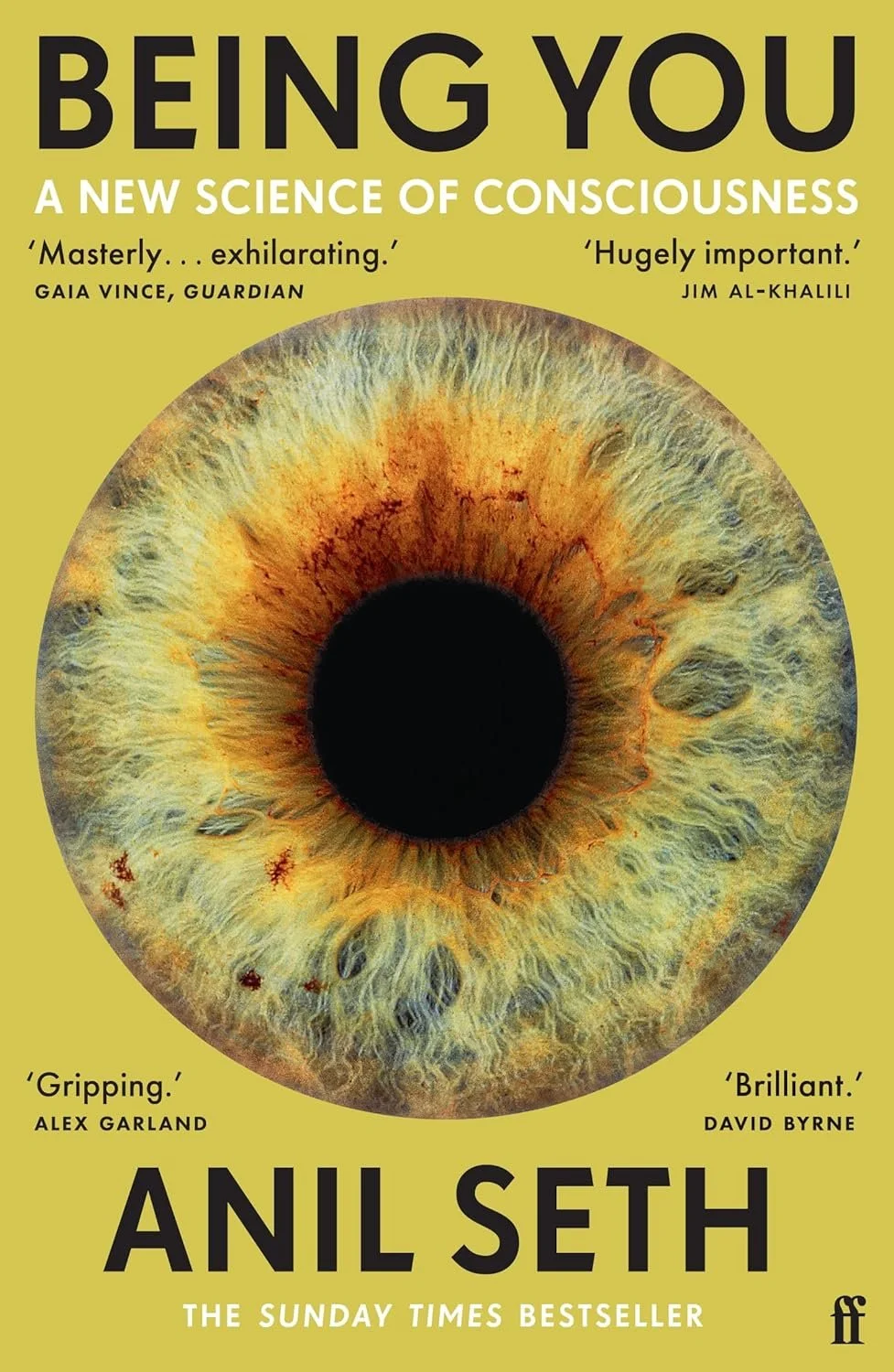
Something stranger and more interesting is emerging from cognitive neuroscience. The neuroscientist Anil Seth lays it out in his book Being You: A New Science of Consciousness. Your brain doesn't receive reality. It predicts reality, then uses your senses to correct its predictions. Most of what you experience as the world out there is actually a model your brain is generating, moment to moment, and adjusting based on sensory input.
Seth calls this controlled hallucination. The phrase sounds provocative, but it's surprisingly accurate. Hallucination, because the brain is generating the experience. Controlled, because the generation is constrained by what your senses are picking up from the world.
This idea matters far beyond consciousness research. It changes how we understand suffering, healing, trauma, and what psychedelic experiences are actually doing to the brain. I want to walk through why. Once you understand the framework, a lot of what happens in psychological work becomes clearer, and especially what happens in psychedelic-assisted therapy.
The Brain as Prediction Engine
The traditional model of perception was passive. Information comes in, the brain processes it, you experience the result.
The newer model works the other way. It's sometimes called predictive processing. Your brain is constantly generating predictions about what should be happening, then comparing those predictions to incoming sensory information. When the prediction matches reality, the experience feels seamless. When the prediction misses, your brain updates.
This sounds technical, but you can feel it in everyday life.
When you're walking down a familiar staircase and you miscount the steps, you get that brief lurching feeling. Your foot goes farther than expected. Your balance unsettles for a moment. That's your brain's prediction error becoming briefly visible. You expected solid ground. Sensation didn't deliver it. The mismatch produced the strange falling sensation.
When you read a sentence with a missing word, your brain often fills in the word automatically. The prediction is so confident that the absence doesn't even register at first. Magicians and optical illusions work by exploiting predictable predictions and producing experiences that contradict them.
Your everyday experience of the world, its colors and solidity and continuity, is largely your brain's confident model of what should be there, lightly corrected by what your senses actually report. Most of the time, the model is so accurate that you experience the world directly. But the experiencing is happening one layer in from reality.
What This Has to Do With You
Here's where Seth's framework gets personal.
If perception of the world is a controlled hallucination, so is your perception of yourself.
The felt sense of being you is not a thing your brain contains. Your body, your thoughts, your sense of being one continuous person across time. All of it is something your brain constructs, continuously, from sensory signals inside your body, memories, narratives about who you are, predictions about who you'll be, and the constant background processing of what it feels like to be alive.
This sounds destabilizing when stated bluntly. But it's actually how consciousness has always worked. You've never been a static entity inhabiting a body. You've been an ongoing process of self-construction the entire time. The continuity you feel is a kind of beautiful illusion, generated by your brain doing its job.
Seth's framing matters because it points at something useful. If the self is constructed, the construction can change.
The patterns you've been running for years are not features of a fixed self. The harsh self-criticism, the chronic anxiety, the depressive self-narrative, the trauma responses. They're predictions your brain is making, repeatedly, about who you are and what's coming. They've become so confident, so automatic, that they feel like simply who you are.
But predictions can be updated.
Why Trauma Is So Hard to Reach With Words
This framework helps explain something a lot of people struggle to understand about their own healing.
Trauma is, at its core, a prediction your brain made under conditions of overwhelming stress, that then got locked in. The world is dangerous. People are not safe. Closeness ends badly. My body is not okay. These predictions formed in the original moment, often when the system couldn't fully process what was happening. They became default models, the brain's confident assumptions about what to expect.
Years later, the world has changed. The original threat is gone. But the predictions are still running. Your brain is still generating experience based on a model that no longer matches reality, and the sensory information you're getting now isn't strong enough to update the model.
This is why insight alone often fails to change traumatic patterns. You can know, intellectually, that you're safe. The predictive model doesn't care. It was built to be robust against challenge, because at the time it formed, holding it tightly was a matter of survival.
What this framework suggests is that real healing requires more than new information. It requires new experiences strong enough to update the model. Experiences the predictive system can actually feel, in the body, repeatedly, over time. The slow build of new predictions that compete with the old ones until eventually the old ones loosen their grip.
This is what trauma-informed therapy is actually doing, even when therapists don't describe it this way. Not just talking about what happened. Creating new experiences of safety in the body, in the relationship, in the room. Experiences strong enough to begin updating the predictive scaffolding that trauma built.
Where Psychedelics Fit Into This Picture
Here's where Seth's framework connects to psychedelic therapy in a way that's both beautiful and clinically important.
The most influential current model of how psychedelics work is called REBUS, for Relaxed Beliefs Under Psychedelics. Robin Carhart-Harris and Karl Friston proposed it in 2019. It suggests that psilocybin, LSD, and similar compounds work by temporarily loosening the brain's predictive models.
In ordinary consciousness, the predictive system is strong, confident, and stable. The model of self and world it produces feels reliably real because it's been refined over years and is reinforced constantly. Even when the model is causing suffering, it's hard to shift because the brain trusts it so much.
Under psychedelics, this changes. The confidence of the predictions softens. The grip of the model loosens. Sensory information that would normally be ignored or absorbed into the existing model can suddenly be seen freshly. The structures that held the experience of self and world stable become temporarily fluid.
This is why people on psychedelics often describe seeing themselves and the world differently, sometimes radically so. Not because new information has appeared, but because the interpretive scaffolding through which everything was being filtered has temporarily loosened. The model of self can be glimpsed as a model. The story of who you are can be seen as a story.
And this is why psychedelic-assisted therapy may help with trauma, depression, and other patterns of suffering. Not because the medicine fixes anything directly, but because it creates a window in which rigid predictive models can be updated by new experiences. The opening is temporary. What gets built during it, through preparation, support, and integration, is what can become lasting.
Worth saying plainly: REBUS is a proposal, not a settled finding. It's the framework most researchers reach for, and it's elegant, but direct testing of its core psychological claims is still in early stages. I find it useful for thinking with. I wouldn't treat it as established fact.
What it does capture well is why so many practitioners now emphasize that the medicine alone isn't the treatment. The medicine softens the predictive scaffolding. The therapy and integration do the actual updating.
What This Framework Offers
A few implications worth holding.
Your suffering is real, but it's not a fixed feature of who you are. It's a pattern your brain is generating, with reasons. The pattern can change, though changing it usually requires more than insight alone.
The self isn't a thing to be fixed. It's an ongoing process. The work of healing isn't repairing a broken object; it's gradually shifting the patterns of construction. Somatic, relational, contemplative, and psychedelic-assisted work all participate in that shifting.
The body is central. Seth emphasizes that consciousness is deeply tied to interoception, the brain's perception of internal bodily signals. Your sense of being alive, of being you, is grounded in your body's ongoing regulation. This is why body-based work reaches places talk therapy can't. The predictive system that shapes your experience is built from bodily input as much as from anything else.
Psychedelics may have a specific role. Not as fixes, but as catalysts that temporarily loosen the predictive structures so that therapy, integration, and lived experience can produce updates that wouldn't be possible otherwise. That's a more sophisticated picture than either "psychedelics are magic" or "psychedelics are dangerous." They are tools with a proposed mechanism.
Healing is possible at a deeper level than symptom management. If suffering lives in predictive models, the deepest healing is at the level of those models themselves. Not just feeling better, but actually relating to yourself and the world from a different scaffolding. This is what people sometimes mean when they describe profound therapeutic experiences as feeling like they became a different person. The construction shifted.
A Different Way to Understand Yourself
The implication of Seth's work I find most useful, both clinically and personally, is that you have never been the fixed thing you assumed you were.
The self you experience is a continuous act of creation. Your brain, in its remarkable way, is generating you, moment to moment, based on bodily signals and predictions and memories. The version of you that exists now is the latest iteration of a self that has been changing all along, even when it felt static.
This isn't nihilism. It doesn't mean you're not real. It means you're more alive than the old metaphor of a fixed self suggested. You are something happening, not something being. And the something that's happening can move.
Some people have lived inside a particular version of themselves for decades. A depressed self, an anxious self, a self defined by trauma. For them, this framework opens a door. The self that has been suffering is one of many possible selves the brain could be constructing. Different inputs, different practices, different experiences can begin to construct a different one.
This is what the work of healing is, at the deepest level. Not removing something. Building something new, slowly, through repetition, through the body, through relationship, through whatever helps your predictive system update.
A Closing Thought
Anil Seth's framework doesn't solve the deepest mystery of consciousness. He's clear about that. We still don't know, at a fundamental level, why brain activity produces experience at all.
But the framework does something more useful for the question of how to live. It locates suffering and healing in a more accurate place. Not in a fixed self that needs fixing, but in patterns of construction that can change. It connects the work of therapy, somatic practice, psychedelic-assisted experience, and integration into a coherent picture. It suggests that the strangeness of altered states is not strange at all. It's just the ordinary process of self-construction becoming briefly visible.
You are a controlled hallucination. That doesn't make your life less real. It makes it more available than the old picture allowed.