
Blog

Subscribe to receive our free Beginner's Guide to Psychedelic Integration.
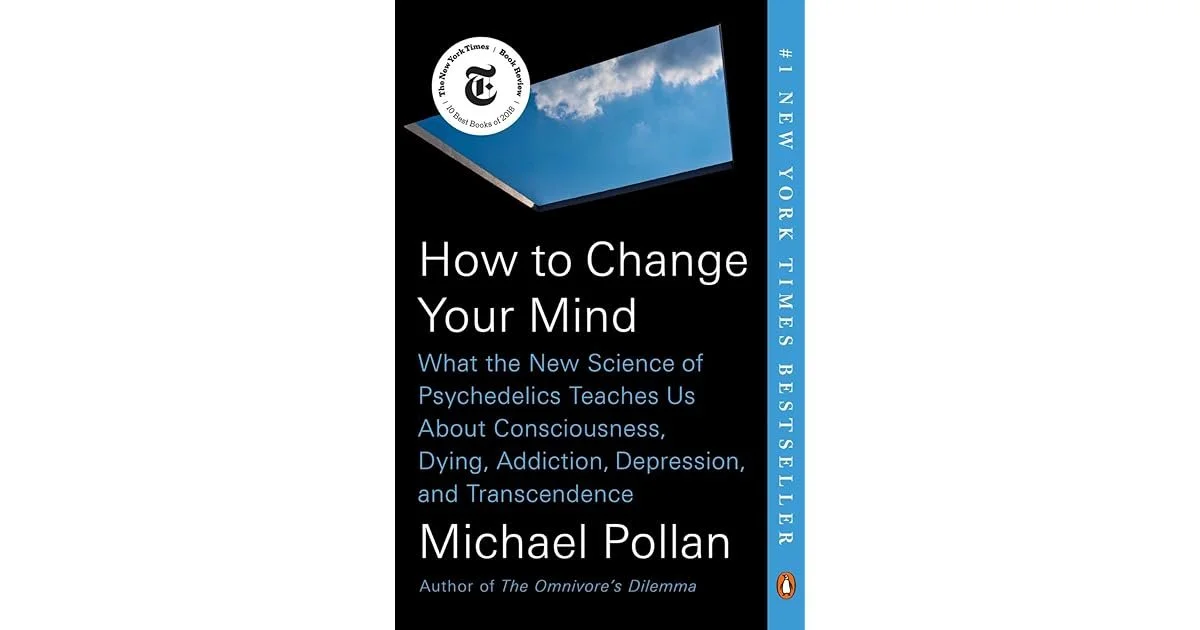
A Recommended Read: How to Change Your Mind
Michael Pollan's How to Change Your Mind is the most accessible mainstream introduction to contemporary psychedelic therapy and remains worth reading, with some important caveats about what's changed in the field since 2018. A therapist's recommendation and a note on how to read it well.
If you're new to the contemporary conversation about psychedelic therapy and you want one accessible book to start with, this is the one I'd point you toward.
Michael Pollan's How to Change Your Mind: What the New Science of Psychedelics Teaches Us About Consciousness, Dying, Addiction, Depression, and Transcendence, published by Penguin Press in 2018, did more than any other single book to move the contemporary psychedelic conversation from fringe to mainstream. It was a bestseller, became a Netflix documentary series, and has likely been read by more people interested in this field than any other contemporary book on the subject.
It's also a model of careful, curious, journalistically rigorous engagement with material that's easy to either overhype or dismiss. Pollan, a respected writer best known for his work on food and agriculture, came to this topic as a skeptic and a journalist. He researched. He interviewed researchers and patients. He underwent guided experiences himself with LSD, psilocybin, ayahuasca, and 5-MeO-DMT. And he wrote about all of it with the measured, slightly bemused intelligence that's his hallmark.
The book is genuinely worth reading. I want to offer a few observations about how to read it well.
What the Book Does Well
The book traces the history of psychedelic research carefully: the early promise in the 1950s and 60s, the cultural and political backlash, the long suppression, and the cautious renaissance that began in the late 1990s. Pollan is good on the institutional history. He's particularly good on the figures who kept the research alive during the dormant years and the new generation of clinicians who picked it up.
He's strong on the current clinical research, particularly the work at Johns Hopkins, NYU, and Imperial College London on psilocybin for depression, anxiety, end-of-life distress, and addiction. He presents the studies fairly, neither overselling the results nor dismissing them.
He's especially valuable on the experiential dimension. Most journalists who write about psychedelic therapy don't actually undergo the experiences they're describing. Pollan does, and his accounts of his own sessions are some of the most honest and unsentimental writing on the subject. He neither claims to have been transformed in some grand way nor dismisses what happened. He sits with the experiences and lets them be complicated.
And his prose is excellent. The book reads easily, moves at a thoughtful pace, and gives you genuine information without being either dry or breathless. For most readers, it's an ideal entry point.
What to Hold Lightly
A few things to keep in mind as you read.
The book is older. Published in 2018, it represents a particular moment in the psychedelic conversation; one of cautious optimism, with FDA approval of MDMA-assisted therapy for PTSD seeming imminent and the broader field on a steady upward trajectory. A great deal has happened since. The FDA rejected MDMA-assisted therapy in August 2024 over serious concerns about study design, blinding, and ethical violations. Compass Pathways' psilocybin trials have produced positive Phase 3 results but the regulatory path remains uncertain. The MAPS organization at the center of Pollan's optimistic account has gone through significant institutional changes and ethical reckonings. The book doesn't capture any of this.
The treatment is more optimistic than the current evidence supports. Pollan was writing during a wave of genuine enthusiasm, and the book reflects that. The studies he highlights were promising, but many of the most exciting early findings have proven harder to replicate at scale than the book implies. The field has been forced into a more sobered position since — recognizing that the medicines are real but their integration into clinical care is harder than was hoped.
The mystical experience framing is more contested than the book suggests. Pollan presents the research on mystical-type experiences as central to therapeutic outcomes, and this remains a major theme in the field. But the framing has been challenged, partly by philosophers like Chris Letheby, who argue that the therapeutic value doesn't actually depend on mystical content, and partly by researchers who worry about the ethical implications of treating mystical experience as the active ingredient. Read Pollan's enthusiasm for the mystical-experience framework with some critical distance.
The book doesn't address what the field has since had to learn about ethics and care. The MAPS-related sexual misconduct cases, the journal retractions, the gap between research conditions and real-world clinical implementation, these are real and ongoing concerns that have shaped how careful practitioners now think about this work. The book predates most of this conversation.
Why I Still Recommend It
With those caveats, the book remains the best mainstream introduction to the field, and one of the few that combines historical context, contemporary science, and honest first-person reporting in a single accessible package. Most readers who finish it have a substantially clearer picture of what psychedelic therapy is, why it's being studied, and what's at stake than they did before.
For people considering psychedelic-assisted therapy now, the book is a useful starting point but not a complete guide. You'll want to supplement it with more current sources for the regulatory landscape, the ethical conversations, and the specific clinical considerations that have come into clearer view since 2018.
For people not considering psychedelic therapy but curious about the broader cultural conversation, the book is excellent. It will give you the vocabulary, the history, and the basic clinical picture to follow what's happening as the field continues to develop.
For practitioners new to this space, it's still one of the recommended starting points — though I'd pair it with more recent and more critical literature.
Where to Find It
How to Change Your Mind is widely available — bookstores, libraries, audiobook. The Netflix documentary series based on the book covers similar territory in four hour-long episodes and is also worth watching if you prefer video.
If you find yourself drawn into the larger questions the book raises — about your own potential interest in this work, about how to think clearly about psychedelic experience, about what careful contemporary care actually involves — you're welcome to book a consultation.