
Blog

Subscribe to receive our free Beginner's Guide to Psychedelic Integration.
Can Psychedelics Reveal Truth, or Just Change Your Mind?
When someone has a profound psychedelic experience and emerges with strong convictions about the nature of reality, what should they do with those convictions? A therapist on philosopher Chris Letheby's careful argument that psychedelic experiences can produce genuine insight — particularly into the constructed nature of the self — without requiring the metaphysical claims that often accompany them.
There's a particular kind of conversation that happens in the weeks and months after a powerful psychedelic experience.
The person who has had the experience returns from it changed. They've seen something. Felt something. Understood something. They want to talk about it, and as they try, they find themselves making claims that sound, in ordinary daylight, somewhere between profound and embarrassing. I understood the nature of reality. I encountered God. I saw that everything is connected. I learned that death isn't real. I knew, for those hours, exactly what the universe is.
Even a sympathetic listener often doesn't know what to do with these reports. The experience clearly mattered. The person clearly isn't lying. Something happened that they're trying to convey. But the claims being made about reality itself often go further than what any experience, however powerful, could actually justify.
This is one of the most important questions in psychedelic medicine, and it's underaddressed in most popular conversation about the field. When someone emerges from a profound psychedelic experience with strong convictions about the nature of reality, convictions they didn't have before and that feel utterly certain, what should they do with them? Are they genuine insights into something deeper? Or are they powerful experiences the brain is producing for its own reasons, with no special access to truth?
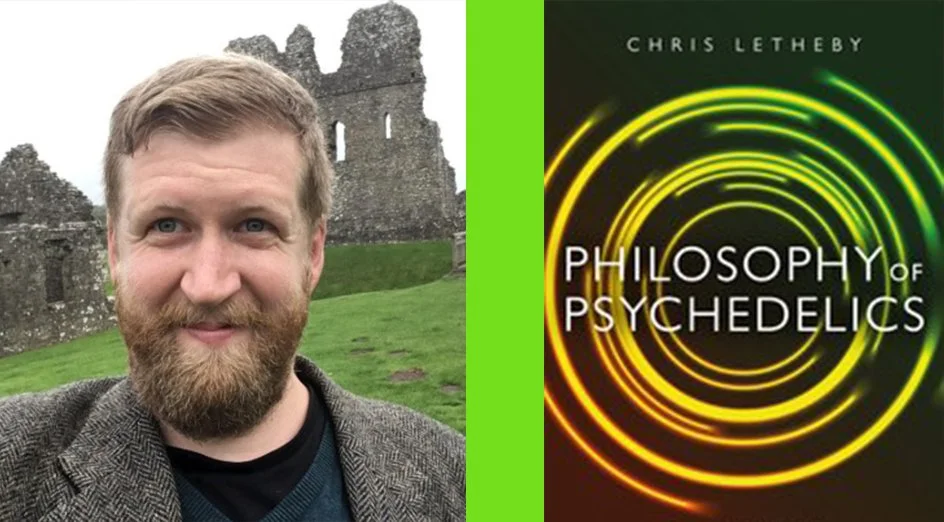
The philosopher Chris Letheby has written one of the most important books on exactly this question. Philosophy of Psychedelics, published by Oxford University Press in 2021, takes the philosophical questions about these experiences as seriously as the clinical and neurological ones. His answer is more interesting than the usual debate allows, and I think it's clinically essential for anyone considering or integrating psychedelic experiences.
The Question the Book Is Actually Asking
It's easy to assume Letheby is looking for middle ground between two camps.
On one side sits the mystical view, which treats psychedelic experiences as windows onto deeper reality. Ego dissolution reveals the true nature of the self. Mystical experiences are encounters with something genuinely transcendent. The medicine opens doors ordinary consciousness keeps closed. This view has deep roots in Indigenous traditions, in 1960s thinkers like Aldous Huxley, and in much contemporary spiritual psychedelic culture. It honors the felt depth of these experiences.
On the other sits a blunt reductionism, which treats them as brain events. Powerful, sometimes useful, ultimately just neurochemistry. The sense of cosmic significance is a side effect of altered brain function. The mystical content isn't real. This view honors scientific caution, and in its cruder forms it dismisses what people have actually experienced as somewhere between delusion and chemistry.
But Letheby isn't splitting the difference. He's a naturalist, and the book is a defense of naturalism, the view that the natural world is all there is. His argument is that naturalism has been sold short. You do not have to abandon it to take these experiences seriously, because the therapeutic and epistemic benefits of psychedelics don't actually depend on any exotic metaphysics being true.
That's a stronger and more interesting claim than a compromise position. He's saying the reductionist was right about the metaphysics and wrong about what follows from it. You can take these experiences seriously without taking them literally.
The Comforting Delusion Objection
The book's central target is what Letheby calls the Comforting Delusion Objection.
It's the worry that psychedelic therapy might work only by deluding people with false metaphysical beliefs. That the depression lifts because the person now believes the universe loves them, or that they've encountered God, or that death isn't real. If that's the mechanism, the objection goes, then the therapy is working through deception, and that's ethically problematic even if it relieves suffering.
The objection deserves to be taken seriously. If psychedelic therapy primarily produced relief by installing false beliefs, the therapist would be implicated in a kind of psychological con. A well-meaning, helpful con, but one whose mechanism depends on deceiving the patient.
Letheby's response is methodical. He argues that the therapeutic benefit doesn't depend on metaphysical conclusions at all. It depends on something else: a change in the sense of self, and specifically a direct experience of the self's constructed nature.
This is the key move. Let me unpack it.
What's Actually Being Revealed
When someone experiences ego dissolution, when the felt sense of being a separate, continuous self temporarily loosens, they're not necessarily discovering anything about the metaphysical structure of the universe. They're discovering something quite specific about themselves. The self they ordinarily experience as solid and continuous is something constructed. Something the brain is doing. Something more flexible and less essential than it feels.
This is not a metaphysical claim. It's a claim about your own mind. And it's almost certainly true. The neuroscience converges with the phenomenology: the self is a model the brain builds, not a fixed entity it contains. Letheby's own account is more specific still. He describes the ordinary sense of self as held together by predictive self-binding, and psychedelics as temporarily unbinding it. That unbinding is what the default mode network research has been circling for years.
People who experience this directly, even briefly, often emerge with a different relationship to themselves. Less identified with the suffering self. More aware that the patterns they've been running aren't permanent features of who they are. More able to consider that change is possible at a deeper level than they had imagined.
Philosophers call this knowledge by acquaintance, a distinction that goes back to Bertrand Russell. It's knowing something not as an abstract claim but through direct experience. A person who has never been heartbroken can know intellectually that heartbreak is painful. A person who has been heartbroken knows it differently. Letheby argues that psychedelic experience can produce knowledge of the constructed self in this richer, directly known sense.
This kind of knowledge is real, valuable, and naturalistically respectable. You don't need to commit to any controversial metaphysical claim to acknowledge that someone who has directly experienced the constructed nature of their own self has learned something genuine.
What's Not Necessarily Revealed
The trouble comes when this insight gets extrapolated.
Many psychedelic experiences arrive with a sense of cosmic significance. The person doesn't just feel that their self is constructed. They feel they have understood the universe. Reality is consciousness. Everything is one. There is no death. We are all connected at the deepest level. I have encountered the divine.
These claims may be true. Some may be true in ways philosophy is slow to acknowledge. But they go further than the experience can justify. The experience produced certainty. The certainty is real. But certainty is not accuracy, and the very neurochemistry that produces the felt sense of profound insight may also produce overconfidence in conclusions that haven't been tested.
This is one of the genuine risks of psychedelic experience that doesn't get talked about enough. The medicines don't just produce experiences. They produce conviction. The conviction can outpace the justification. People can emerge holding metaphysical beliefs with the certainty of having known them directly, and build their lives around those beliefs in ways that don't always serve them.
I see this clinically. The person whose marriage breaks up because they've decided, after a ceremony, that their partner doesn't share their cosmic understanding. The person who quits a career they were good at to follow a calling they received during a journey. Sometimes these decisions turn out to be wise. Often, in retrospect, they look like someone acting on certainty that hadn't been tested against ordinary life. It's a version of a pattern I've written about elsewhere, where insight alone doesn't produce change and can even substitute for it.
The risk isn't that people have spiritual experiences. It's that they conflate the depth of an experience with the truth of every claim that emerges from it.
Letheby's Resolution
Letheby's framework offers a way through.
The therapeutic and epistemic value of psychedelic experience, on his account, doesn't depend on the metaphysical claims being true. It depends on something more modest and more defensible. The experiences alter the sense of self, expand what the person takes to be psychologically possible, and create conditions in which rigid patterns of thought and feeling can soften.
That is what produces lasting change. Not the conviction that consciousness is fundamental to the universe, or that one has encountered God. The experiential recognition that the self you've been suffering inside is not as solid as it felt. That recognition, even briefly held, can be liberating in ways careful philosophical argument never quite is.
For the metaphysical content, Letheby offers a concept worth borrowing: epistemic innocence. A belief or experience can be epistemically innocent when it delivers real epistemic benefits that couldn't be obtained any other way, even if the belief itself isn't justified. This gives you a way to hold the mystical content without either dismissing it or endorsing it. Something happened. It did real work. Whether its literal content is true is a separate question, and one you don't have to answer to benefit.
The practical stance that follows is something like: something real happened that I don't fully understand. I'll let it work on me without committing too quickly to what it means.
This is, I think, the most clinically and philosophically responsible way to hold psychedelic experience. It honors the depth without ceding judgment. It accepts the value without endorsing every claim.
Why This Matters for Integration
This question is not abstract. It comes up constantly in integration work with people who have had powerful psychedelic experiences.
The person who returns from a journey convinced of something they hadn't believed before faces a real choice. They can integrate the experience, letting its depth and meaning continue to work on them, without yet committing to particular metaphysical conclusions. Or they can quickly translate the experience into beliefs and start rearranging their life around them.
The first path tends to produce more sustainable change. The depth gets honored. The harder work of letting it gradually reshape ordinary life can unfold over months and years. The metaphysical questions stay open, examined against further experience and ordinary judgment.
The second path is vulnerable to a particular trap. Beliefs adopted in the wake of profound experience are sometimes adopted to protect the experience, to preserve its meaning by codifying it. But codification can become rigid. The person becomes someone with a particular spiritual identity, a particular metaphysical commitment, a particular way of seeing the world they're now invested in defending. The original openness that made the experience meaningful hardens into something more brittle.
This is one form of what's sometimes called spiritual bypass, using spiritual conclusions to avoid harder psychological work. The person who has decided that everything happens for a reason may use that belief to avoid grieving real losses, to bypass difficult feelings, to skip the slow work of actually changing how they live. The metaphysical conclusion gets installed where the harder work should be happening.
Good integration work helps people stay with the experience without rushing into beliefs that might not serve them. What was true about what you experienced? What's worth letting work on you? What conclusions are you reaching that may have outrun the evidence? These are questions a thoughtful integration therapist can help someone sit with, without dismissing what was real and without endorsing whatever the experience seemed to claim. It's closely related to how we make meaning of what we experience, which is its own skill and its own risk.
A Deeper Continuity
What I find most valuable about Letheby's framework is that it connects psychedelic experience to a question that applies far beyond psychedelics.
The same question shows up in religious experience. Mystical states in meditation. Encounters with grief, beauty, or terror that feel revelatory. Moments when ordinary reality seems to peel back and reveal something underneath. People throughout history have had experiences that produced powerful conviction about the nature of things, and how to hold those convictions has been a perennial problem.
The traditional contemplative answer, in many wisdom traditions, has been go slowly. Hold the experience without rushing to conclusions. Let it work on you. See what remains after months and years. The teacher's job, in many traditions, is partly to keep the student from getting attached to particular experiences or convictions, to keep the inquiry open rather than closing it with premature certainty.
Letheby is applying something like this wisdom to the modern question. The experiences are real. They may produce genuine insight, particularly into the constructed nature of the self. They also produce conviction that can outpace evidence. The careful work is holding the depth and the humility at once.
It's also worth saying that Letheby doesn't stop at damage control. The last substantive chapter of the book is about naturalizing spirituality, and he argues that genuine spiritual growth is available on a naturalistic picture. Spirituality, on his account, is largely a matter of unselfing. That's a claim with real teeth. It suggests the contemplative traditions were tracking something true about human minds even where their metaphysics may not survive scrutiny.
A Closing Thought
What's available in a careful psychedelic experience, on Letheby's view, isn't access to ultimate reality. It's something more modest and more useful. A direct, embodied recognition that you are not what you thought you were. That the self you've been suffering inside is one of many configurations your mind could take. That the patterns you assumed were essential to who you are are, in fact, optional.
This is real knowledge. It isn't metaphysical certainty about the universe, but it doesn't need to be. It's enough to support meaningful psychological change. It's enough to open doors ordinary consciousness keeps closed. It's enough, often, to make people's lives meaningfully better.
What it asks in return is a kind of intellectual humility. The willingness to hold what you've experienced without immediately codifying it. The capacity to let an experience continue to work on you without rushing to install conclusions. The patience to let depth become wisdom over time rather than mistaking the felt force of an experience for the truth of every claim that emerges from it.
This may be the most important integration skill there is. And it applies whether you've ever taken a psychedelic substance or not.
If you'd like to explore what careful, clinically informed integration of psychedelic experiences could look like, or to think through how to hold profound experiences of any kind without losing yourself in them, you're welcome to book a consultation.